Gt Yarmouth Wildfowling &
 Gt Yarmouth Wildfowling & Conservation Association
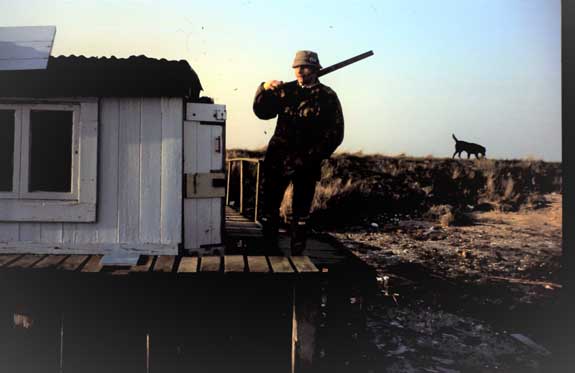
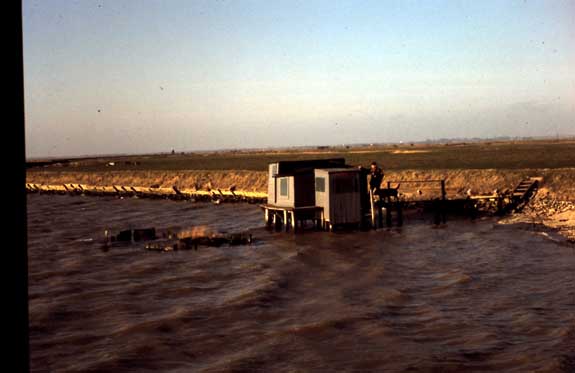
For many years various houseboats could be found along the seawall around Breydon estuary. Usually the hull of tarred smack boats with a cabin on top they were supported and anchored by wooden posts and sleepers buried in the mud and did not float so got wet inside on a big tide. Access was by wooden walkway or steps.
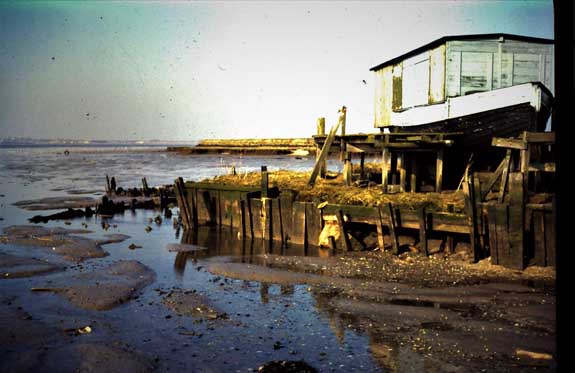
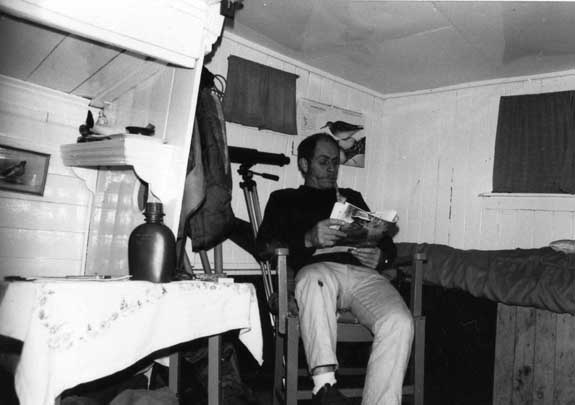
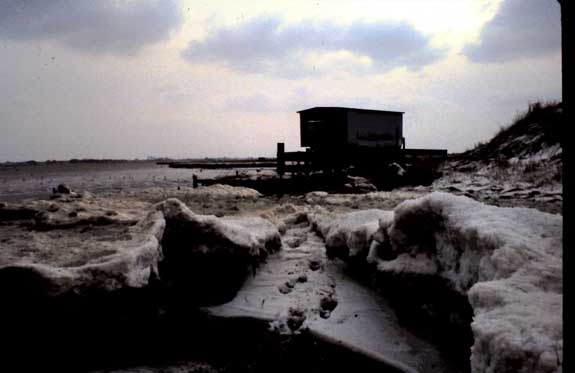
Inside one could typically find a couple of bunks with a small locker, small stove for warmth and cooking and very cosy they were, especially in winter with a foot of snow on the roof.
In wild weather it would seem like the end of the world was nigh as the old houseboats would shake and rattle and some nights we would wonder if we would get blown away.
Typically I would row up the estuary, in my gun punt, to my houseboat, on the north wall of Breydon.
Unlocking, I would remove the shutters covering the windows, stow away the supplies, brought by punt, into various cupboards. Drinking water was brought up in a big plastic tub, whereas washing water was from collected rain water in a tank off the roof. In the early days, I had a tortoiseshell stove with a chimney pipe going up through the roof; this was later replaced by a little calor gas stove.
Meals on board were often fry ups with the usual sausages, bacon, eggs , mushrooms and in the days before they went on the protection list I would flash fry Curlew and Redshank breast. In the spring these could be supplemented by moorhen and plover eggs off the marshes. Other times, I would make a big old stew, take it to the houseboat in a bag, mix it with water in a large saucepan and let it simmer all day on the stove. Just the stuff to return to after a cold wet flight.
Every few days I would row down with the tide to North Quay, moor up and replenish stock at James stores, by the old bridge, and then back upstream with the flooding tide.
Winter nights could be long, so a good book was a main stay, with a “tranny” radio playing radio Caroline. Add plenty of beer and baccy and you could follow Breydon until hell decided to freeze over.
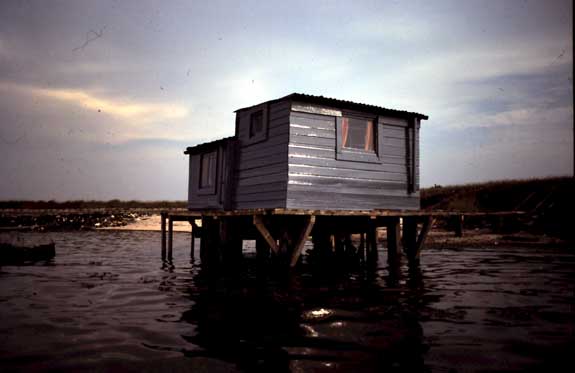
Wildfowlers houseboats were a feature of a way of life on the estuary.
I would sometimes stay at my houseboat up to 3 weeks at a time, summer and winter. There were no houseboats along the south wall in those days.
(See map below) Starting on the Lumps, working west
1. In front of what is now Asda, there was a houseboat on the salting belonging to Bob Allen, wildfowler.
2. In the lower run there was an old broad’s cruiser that belonged to one Harold Davis.
3. Next along the wall in Rotten Eye corner next to the railway line was a small metal house boat belonging to a couple of wildfowlers but I never knew them or their names.
4. Moving west there was the old houseboat Pintail belonging one Bill Mason, a wildfowler. This was dismantled in 1965 and a new Pintail erected in its place by B Frosdick and members of the wildfowlers association.
5. Further west was the Lapwing, built there in 1929 by Robin Harrison a founder member of Yarmouth Wildfowlers Association, later given to D Foyster in 1970.
6. Next along on the landward side of the wall where the wall turns north for a short stretch was an old wartime caravan that had seen service in the African desert, also belonging to Harold Davis.
7. At Lockgate corner a houseboat arrived in 1964, belonging to lady birdwatcher Maria King, later to become the property of Colin and Phillip Smith wildfowlers.
8. On Duffles Rond was the wreck of a wildfowlers houseboat, probably Percy Trett and Jim Bretts.
9. In 1964 George (Deafy) Rose pulled up his houseboat Swan on the south edge of the rond. George was a puntgunner and at that time secretary of Yarmouth Wildfowlers.
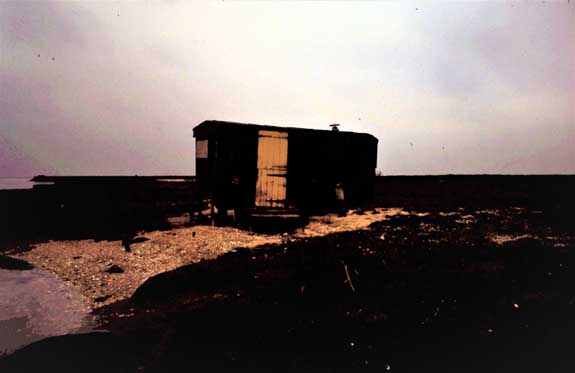
10. Along the wall by the pumping station a dutch hulk appeared about the same time owned by a guy called Wilson.
11. At the Dicky Works there was a houseboat that had belonged to George Rose but later to Peter Allard, birdwatcher.
12. On the saltings at Berney arms was the houseboat Greylag, belonging the Carter brothers who had towed the boat there from Reedham where they lived, with ropes along the river bank. They were eel fishermen
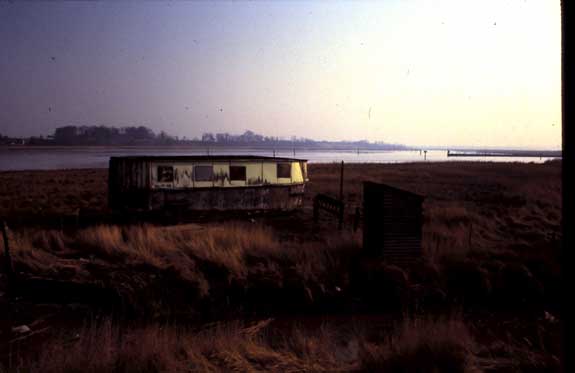
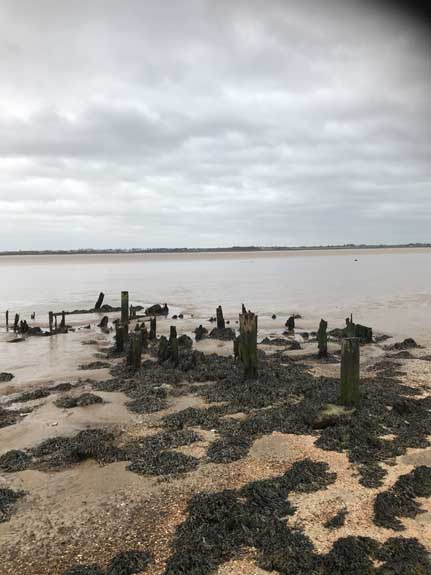
Alas! There is not one left, but at low tide you can just make out some of the support timbers to remind one of a time passed.